Friday, August 7, 2015

ABBREVIATIONS IV


                                                          ABBREVIATIONS IV


1. NOIDA - New Okhala Industrial Development Authority

2. VIRUS - Vital Information Resources Under Seige

3. TDS - Tax Deducted at Source

4. CC/  Bcc - Carbon Copy/ Blind Carbon Copy

5. SMS - Short Messaging Services

6. PNR - Passenger Name Reference

7. RSVP - Respondz S'il Vous Plait

8. BBC - British Broadcasting Corporation

Wednesday, August 5, 2015

10 most Oldest Languages of the World


                                            OLDEST LANGUAGES OF THE WORLD


1. TAMIL : Tamil Language is more than 5000 years old and its literature is vast and varied. Tamil is one the longest surviving classical languages in the world, just 14 years ago, a survey concluded there were 1,863 newspapers published in Tamil proving that the language is still used today.

2. SANSKRIT: Researchers believe that Sanskrit, which heavily influenced many European languages, originated from Tamil. Sanskrit is the classical language of India, dating back to 3000 BC. Sanskrit is still one of India's official languages, although its use in the vernacular is limited.

3. EGYPTIAN : Egyptian is the oldest known language of Egypt. It comes from the Afro - Asiatic language family. Tomb walls bearing autobiographical writings in old Egyptian have been found dating back to 2600 -2000 BC. There is considerable and varied literature in Egyptian. Today, Egyptian survives as the liturgical language of the Coptic Church.

4. GREEK : The earliest written evidence of the Greek language dates back to 1450 BC. Greek is mostly spoken in Greece, Albania and Cyprus, by roughly 13 million people. The Greek language has a long and rich history which makes it among the oldest of European languages.

5. CHINESE : The first written records of Chinese language date back 3000 years to 1200 C and the Zhou Dynasty. Over time, the Chinese language has evolved and nearly 1.2 billion people speak some form of Chinese as their first language. This is the most popular language spoken in the world.

6. ARAMAIC : Research has shown that large parts of Hebrew and Arabic languages are borrowed from the Aramaic language. Diplomatic documents between Aramaean city states dating back to the 10th century BC ( 1000 BC ) prove this to be one of the oldest languages. Modern Aramaic, in its various dialects, is spoken in modern - day Iraq, Iran, Syria, Israel, Lebanon and various Western Countries to which the native speakers had emigrated, including Russia, Europe, Australia and USA.

7. HEBREW : Hebrew is 3000 years old, originating around 1000 BC. It is an ancient Semitic language and the official language of the State of Israel. For many years, Hebrew was a written language mostly for sacred texts thereby give the name of " holy language ". Today, it is both a spoken and written language that ties the Jewish community together.

8. KOREAN : The Korean language dates back to 600 BC. The Korean language is spoken by more than 65 million people living on the peninsula and is outlying islands as well as 5.5 million Koreans living in other parts of the world. The fact that all Koreans speak and write the same language has been a crucial factor in their strong national identity.

9. ARMENIAN : Armenian is an Indo - European language spoken by Armenians, its language has a long literary history, with a fifth - century Bible translation as its oldest surviving text. The last text found makes it likely that Armenian began around 450 BC. Today, Armenian is the mother tongue of over 5 million people.

10. LATIN : Old Latin refers to the Latin language in the period before 75 BC. Latin was the language of the victors of many wars and battles fought on the Italian peninsula. It gained most importance when it became the formal language of the Roman Empire. All Romance languages are descended from Latin, and many words based on Latin are found in other modern languages such as English. Today, Latin is taught in higher education courses and still endures.


Jeni & Santo
                                             

Tuesday, August 4, 2015

Abbreviations - III


                                                      ABBREVIATIONS - III


1.  HDFC - Housing Development and Finance Corporation

2. CTC - Cost to Company

3. IFSC - Indian Financial System Code

4. USP - Unique Selling Proposition

5. PAN - Permanent Account Number

6. SENSEX -  Sensitive Index

7. PDF - Portable Document Format

8. USB - Universal Serial Bus

9. NDTV - New Delhi Television

10. JPEG - Joint Photographic Experts Group

11. PNG - Portable Network Graphics

12. GIF - Graphics Interchange Format

13. WIFI - Wireless Fidelity

14. SIM - Subscriber Identity Module

15. IAS - Indian Administrative Service.


Jeni & Santo

Monday, August 3, 2015

Abbreviations - Part II


                                                              Lets Abbreviate Part II


1. HTML - Hyper Text Mark - up Language

2. MODEM -  Modulator - De- Modulator

3. HTTP - Hyper Text Transfer Protocol

4. BPO - Business Process Outsourcing

5. DSLR - Digital Single Lens Reflex.

6. BC/ AD/ CE - Before Christ/ Anno Domini/ Common Era

7. AM / FM - Amplitude Modulated/ Frequency Modulated

8. i.e/ e.g - In Effect / Example Given

9. LSD - Lysergic acid diethylamide

10. DLF - Delhi Land and Finance

11. HTC - High Tech Computer

12. LG - Lucky Gold Star

13. WIPRO - Western India Products

14. PVR - Priya Village Road Show.

15. NEFT - National Electronic Funds Transfer.


Jeni & Santo

Friday, July 31, 2015

Lets Abbreviate - Part - I


                                                                 ABBREVIATIONS


  •  BMW - Bavarian Motor Works


  •  DHL - Dalsey, Hillblom and Lynn


  •  NASA - National Aeronautics and Space Administration


  •  DDT - Dichloro Diphenyl Trichloroethane.


  •  DNA - Deoxyribo Nucleic Acid


  • PTO - Please Turn Over


  • P.S - Post Scriptum


  •  AM/ PM - Ante  Meridian/ Post Meridian


  •  RADAR - Radio Detection and Ranging


  • SCUBA - Self Contained Underwater Breathing Apparatus.


  • LASER - Light Amplifiction by the Stimulated Emission of Radiation.


  •  ATM - Automated Teller Machine


  •  PIN - Personal Identification Number


  • OK - Oll Korrect


  • URL - Uniform Resource Locator.


Jeni & Santo

Wednesday, July 29, 2015

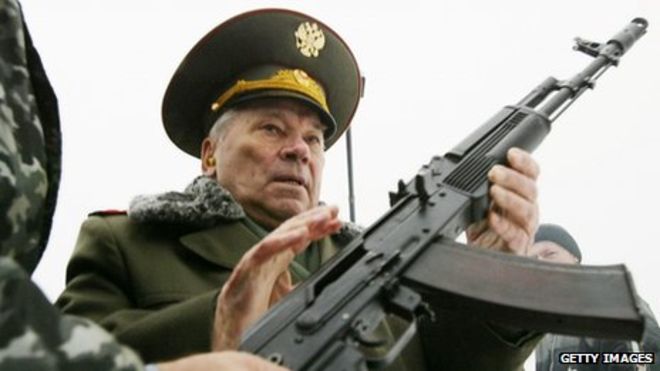
The designer of AK-47 ASSAULT


# Mikhail Timofeyevich Kalashnikov

# Born on 10th November, 1919 at Kurya, Russia

# He held a degree of Doctor of Technical Services

# The designer of AK - 47 Assault.

# Russian General, Inventor, Military Engineer, Writer and Small Arm Designer.

# Attained fame in designing AK47 and its improvement AKM ( Kalashnikov Automated Rifle )and AK 74 ( Kalashnikov Automated Rifle model 1974 ).

# He was one of the men who emphasized that the rifle is an weapon of Defence and not for Offence.

# He had written 6 books and continued to write poetry all through his life

# After completing 7th grade, he joined a tractor company as a mechanic and developed a passion for weaponry.

# In 1938, he joined Red Army and since he was short, he was made a tank mechanic and later went on to became a tank commander.

# The tank and other weapons which he first invented are kept in American Wartime Museum

.# It is said that his motive was to serve his country and not to make any money with weapon production.

# Died on 23rd December, 2013


Jeni & Santo

Tuesday, July 28, 2015

T. NAGAR, Chennai-600017


  T.Nagar   was  planned   in  1923-25.

  • T.Nagar  was  a  big   lake  in  1916. Names  like  Lakeview  road in  Mambalam,  lake  area  in  Nungambakkam  at  present  prove  this.
  •   Only  one  person  by  name  Subramaniyam   Iyer  owned  hundred   acres  of   land   in  T.Nagar   in  1920s.
  •   Mambalam  is  older   than   T.Nagar  which   was  called   as  New  Mambalam   initially.
  •   One  ground   of  land   was  rupees   five  hundred   in  1920s. 
  •   One  acre  of  land    was  rupees   two  thousand   in  1923.
  •   In  1933 ,   Pondichery  Chokkalinga  Mudhaliar  built  ten  shops  and   named   it  as  Pondy  Bazar  to  glorify   his  native   place   Pondichery. 
  •   Renganathan  street   was  an  Agraharam ,  a  residential   area   in  1948.
  •   During   second   world   war ,   Madras  High   Court   was  shifted  temporarily   to  Holy  Angels  School   in  T.Nagar. 
  •   In  1930 ,   fourteen   grounds   of   land  for  T.Nagar  Social  club  was  purchased  for  rupees   two  thousand   nine  hundred  from   Government. 
  •   In  1930s ,   after  10  pm  foxes use  to  knock   the  doors   of   houses   in  T.Nagar. 
  •   There   was   a   big  comman  well  in  T.Nagar  on  which   Kannadasan   statue   stands  now.
  •   Staying   in   hotels   was  considered   as  below   dignity   in  1930s. 
  •   In  1930s,   there  was  no  radio . Hence ,   people   use  to  assemble   at  Panagal  park  to  listen 7.15  pm  news.  There  was   no  movement   of   people   after  8  pm.

       CHANGE  IS  THE  ONLY  UNCHANGEABLE  THING  IN  THE   WORLD

Jeni & Santo .